
October 13, 2025
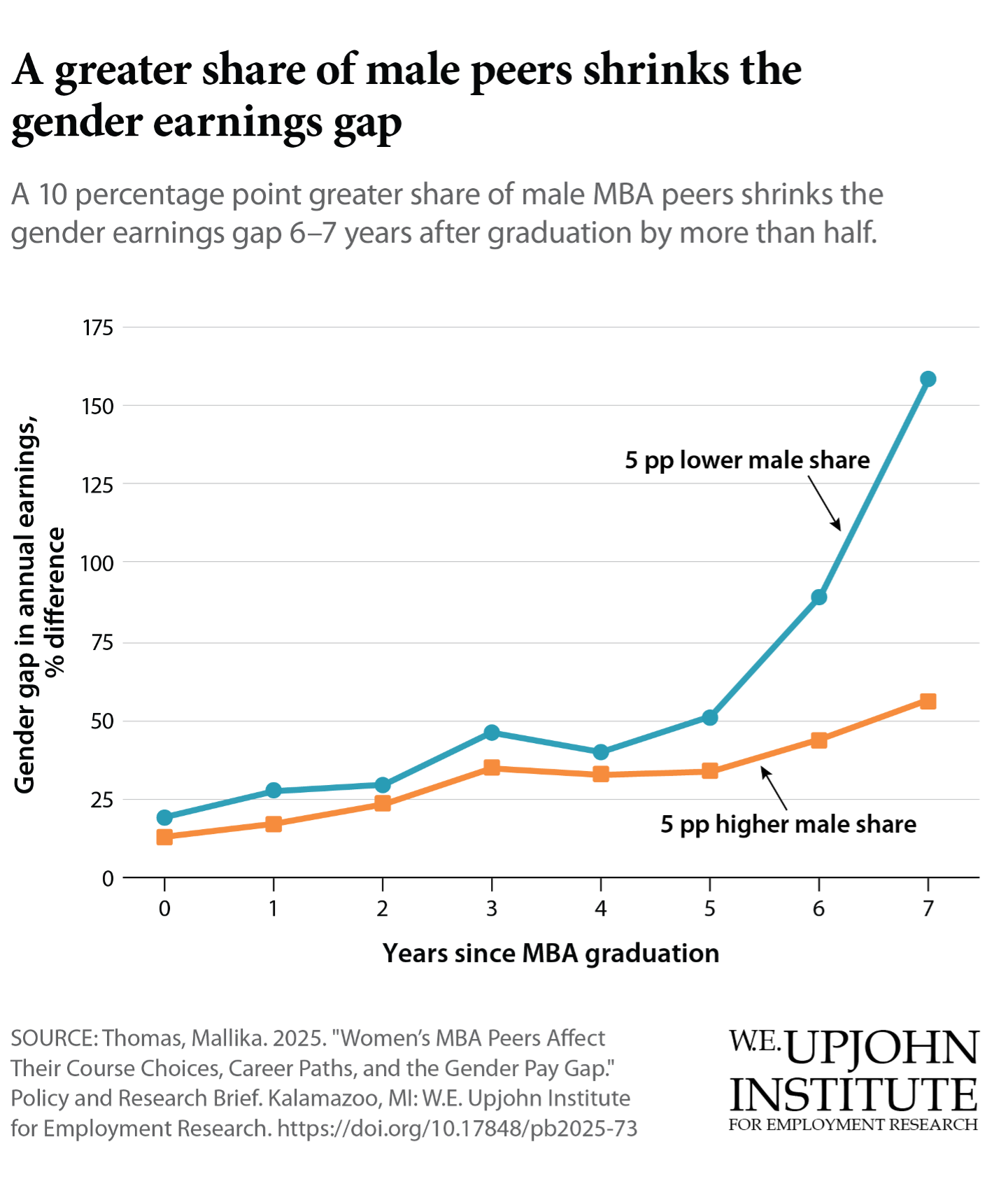
Despite increases in women’s educational attainment, the gender gap in earnings remains sizable, suggesting that education may no longer play a large role in the gender gap. New research examines how another key factor – a student’s randomly assigned peers in business school – affects the courses the students take, the types of jobs they enter, and their subsequent earnings.
The research, conducted by economist Mallika Thomas, found that women in business school randomly assigned to a peer group with a greater share of male peers take more quantitative courses and are more likely to concentrate in a quantitative field of study. These women, on average, accept job offers at graduation in occupations, industries, and firms with higher wages, longer hours, and greater earnings growth. The role of peer gender composition on women’s earnings grows significantly over the career, with the effect seven years after graduation nearly 25 times that at graduation.
The research was supported by the Upjohn Institute’s Early Career Research Awards, providing resources for junior researchers (within six years of earning a PhD) to carry out policy-related research on employment issues.